If you don’t have time to read, then listen to an overview of what conversion rate optimization is and why it’s important for every business.
Do you have a lot of visitors on your website, but sales or inquiries don’t meet expectations? You’re not alone. This is a common issue, and the solution lies in conversion rate optimization (CRO) — a strategic process that turns passive visitors into active customers. It is the most direct way to maximize the return on investment (ROI) of your digital marketing.
Our comprehensive guide gives you an overview of what CRO is, how the process works, and the practical strategies you can start using right away to significantly improve the performance of your website or online store.
What is conversion rate optimization (CRO)?
Put simply, a conversion is any desired action a visitor takes on your website. It doesn’t always have to be a purchase. A conversion can be:
- Purchasing a product from an online store
- Filling out a price inquiry form
- Subscribing to a newsletter
- Creating a user account
- Downloading a PDF guide
- Booking a demo product
The conversion rate is the percentage of visitors who complete the desired action. If 100 people visit your site and 2 of them make a purchase, your conversion rate is 2%.
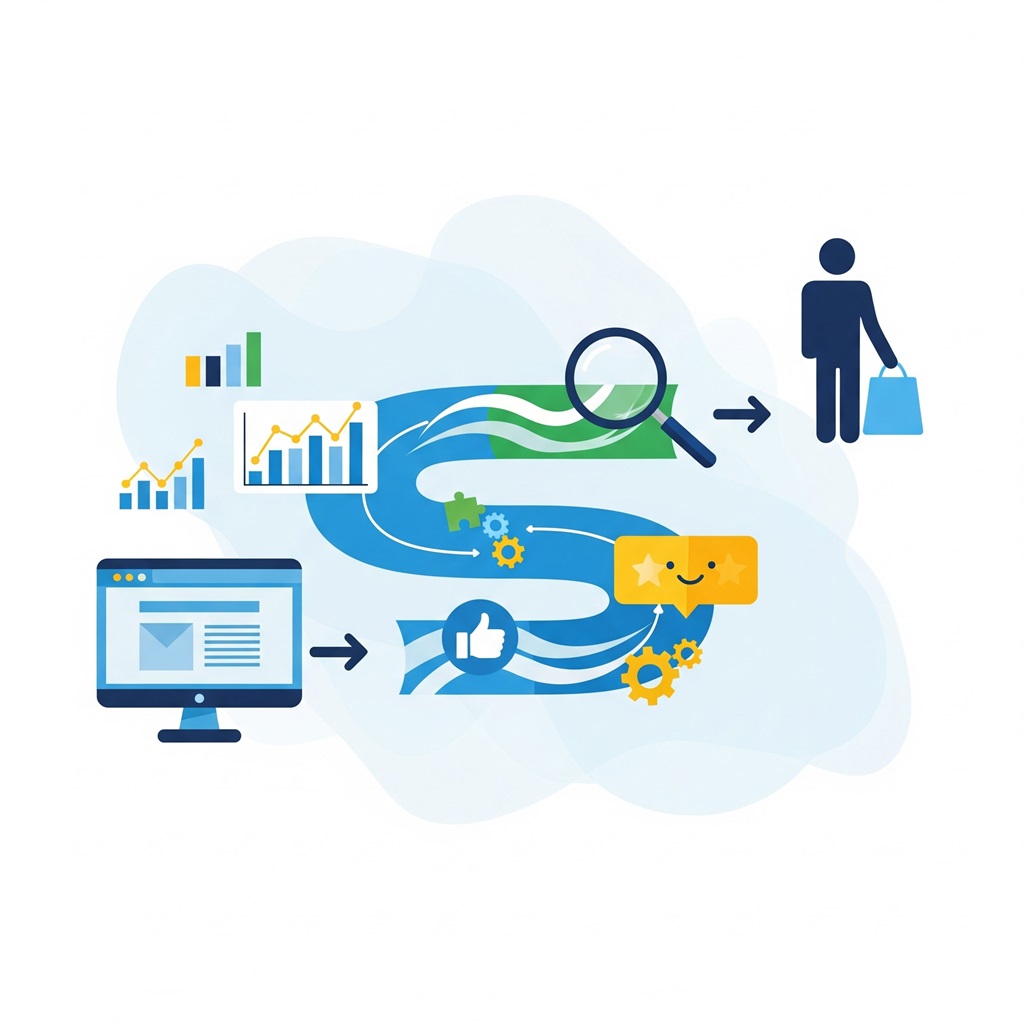
Conversion rate optimization (CRO) is a data‑driven and systematic process aimed at increasing that percentage. It involves understanding user behavior, identifying obstacles, and testing website elements (such as design, copy, buttons, and forms) to make completing the desired action as easy and intuitive as possible for the visitor.
Why is CRO critical for your business?
CRO is not just a cosmetic improvement — it is an investment that generates real returns.
- You maximize the value of your existing traffic: Acquiring new visitors through paid advertising (Google Ads, Facebook) or SEO is expensive. CRO helps you generate more revenue from the traffic you already have, which means every euro spent on marketing becomes more effective.
- You will improve the user experience (UX): CRO is centered around the user. By understanding what frustrates or confuses your visitors and resolving those issues, you create a smoother and more enjoyable user experience. A satisfied visitor is more likely to return and recommend you to others.
- You increase credibility: A professional, fast, and easy‑to‑use website builds trust. During the CRO process, elements that create uncertainty are removed and trust signals (such as customer reviews and security badges) are added, encouraging visitors to complete a purchase.
- You gain a competitive advantage: A company that deeply understands its customers and optimizes their journey is always one step ahead of competitors who rely solely on gut feeling.
Infograafik
Download the infographic in PDF format. Click here!
Data‑driven CRO process: a step‑by‑step guide
Successful optimization is not guesswork. It is a scientific method made up of four core stages.
Stage 1: analysis and data collection
Before changing anything, we need to understand what is happening right now. In this phase, we collect both quantitative and qualitative data.
- Kvantitatiivne analüüs (MIDA?): Kasutame analüütikatööriistu nagu Google Analytics 4, et leida vastused küsimustele:
- Millistelt lehtedelt külastajad kõige sagedamini lahkuvad?
- Millises ostu- või päringuprotsessi etapis on suurim “ära kukkumine” (drop-off)?
- Millised liiklusallikad toovad kõige paremini konverteeruvaid külastajaid?
- Kvalitatiivne analüüs (MIKS?): Kasutame tööriistu nagu Hotjar või Microsoft Clarity, et mõista kasutajate käitumise tagamaid:
- Kuumakaardid (Heatmaps): Näitavad, kuhu kasutajad klikivad, kui kaugele lehel kerivad ja kuhu oma hiirekursorit liigutavad.
- Sessioonide salvestused (Session Recordings): Anonüümsed videod reaalsetest kasutajasessioonidest, mis paljastavad segaduskohad ja tehnilised vead.
- Küsitlused ja tagasiside: Küsi otse kasutajatelt, mis neile raskusi valmistab.
Stage 2: formulating hypotheses
Based on the collected data, we create testable hypotheses. A good hypothesis follows the format: “If we change [X], then [Y] will happen, because [reason].”
- Bad hypothesis: “We will change the button color.”
- Good hypothesis: “If we change the ‘Buy’ button color to green, the number of clicks will increase by 15%, because it stands out better from the page background and is psychologically associated with a positive action.”
Stage 3: testing and experimentation
To validate the hypotheses, we run tests. The most common method is A/B testing.
- A/B testing: We create two versions of the page (A and B). Version A is the existing one (the control), and version B includes the change (the variation). We direct half of the traffic to A and half to B, and measure which version achieves a better conversion rate. Tools used for testing include Google Optimize, VWO, or Optimizely.
Stage 4: measuring and implementing results
When a test produces a statistically significant result (meaning the outcome is not random), we implement the winning version for all users. It’s important to understand that even a “losing” test is valuable — it tells us what does not work. The process then starts again with a new hypothesis.
10 practical CRO strategies you can try right away
- Simplify forms: Ask only for the information that is truly necessary. The fewer fields there are, the higher the likelihood that the form will be completed.
- Create clear and persuasive calls‑to‑action (CTA) buttons: Use active, benefit‑oriented language (e.g., “Get the free guide” vs. “Submit”). Make the button visually prominent.
- Improve page load speed: Every second counts. Optimize images, use caching, and choose high‑quality hosting.
- Add social proof: People trust other people. Include customer reviews, ratings, testimonials, and logos of well‑known clients.
- Use high‑quality images and videos: Professional product photos and videos help visitors make an informed decision.
- Present your value proposition clearly: The visitor must understand within the first 5 seconds what you offer and why they should choose you.
- Optimize for mobile view: More than half of web traffic comes from mobile devices. Make sure your site is fast, convenient, and easy to navigate on mobile.
- Reduce distractions: Remove all unnecessary links, banners, and pop‑ups from the purchase or inquiry process that could divert the user’s attention.
- Offer live‑chat support: A quick answer to a question can be a decisive factor in completing a purchase.
- Be transparent with prices and terms: Don’t hide shipping costs or other extra fees until the final step. Unexpected costs are the main reason for cart abandonment.
Our CRO service – your partner on the path to growth
Conversion optimization is an ongoing process that requires time, specific tools, and analytical thinking. If you lack the time or expertise, we’re happy to help.
Our CRO service includes:
- Comprehensive audit: We analyze your website data and user behavior.
- Strategy development: We define clear goals and an action plan.
- Testing: We run A/B tests and other experiments.
- Reporting: We provide regular updates on results and next steps.
We have helped dozens of Estonian companies increase their sales and number of inquiries.
Frequently Asked Questions (FAQ)
How quickly can you see results?
CRO is a marathon, not a sprint. While some quick fixes (such as changing button text) can deliver immediate results, systematic and data‑driven testing takes time. Achieving statistically significant outcomes may take anywhere from a few weeks to a few months, depending on the volume of traffic your website receives.
What is a good conversion rate?
It depends heavily on the industry, product, and price range. In e‑commerce, a conversion rate of 2–5% is generally considered good. For B2B services, it can be higher. What matters most is comparing yourself primarily to your own past performance and aiming for continuous growth.
Is CRO the same as SEO?
No, although they complement each other. SEO (Search Engine Optimization) focuses on bringing high‑quality traffic to your website from search engines. CRO focuses on turning that traffic into customers. Good SEO brings visitors to your doorstep, good CRO invites them in and convinces them to buy.
Are you ready to improve your results?
Don’t let your valuable web traffic go to waste. Get in touch with us and let’s turn your website into a powerful sales machine.